Berlin-Wilmersdorf and the Beauty of Two Iconic Squares

Berlin-Wilmersdorf, a district nestled in the western part of the city, is a blend of elegance, history, and the meeting of 2 timlines - the one before WW2, and the one after Among its most notable features are two squares that represent both the past and present of this unique area: Ludwig-Kirch-Platz and Prager Platz. These spaces not only shape the character of Wilmersdorf but also offer a glimpse into Berlin’s dynamic history.
Ludwig-Kirch-Platz: A Green Gem in Wilmersdorf
Ludwig-Kirch-Platz is a tranquil oasis in the heart of Wilmersdorf. Named after the clergyman Ludwig von Wurmb, the square is dominated by the stunning St. Ludwig’s Church, built in a neo-Gothic style. Surrounded by stately pre-war buildings, this square exudes a village-like atmosphere amidst the bustling city. With its benches, trees, and green spaces, it’s the perfect spot for relaxation.
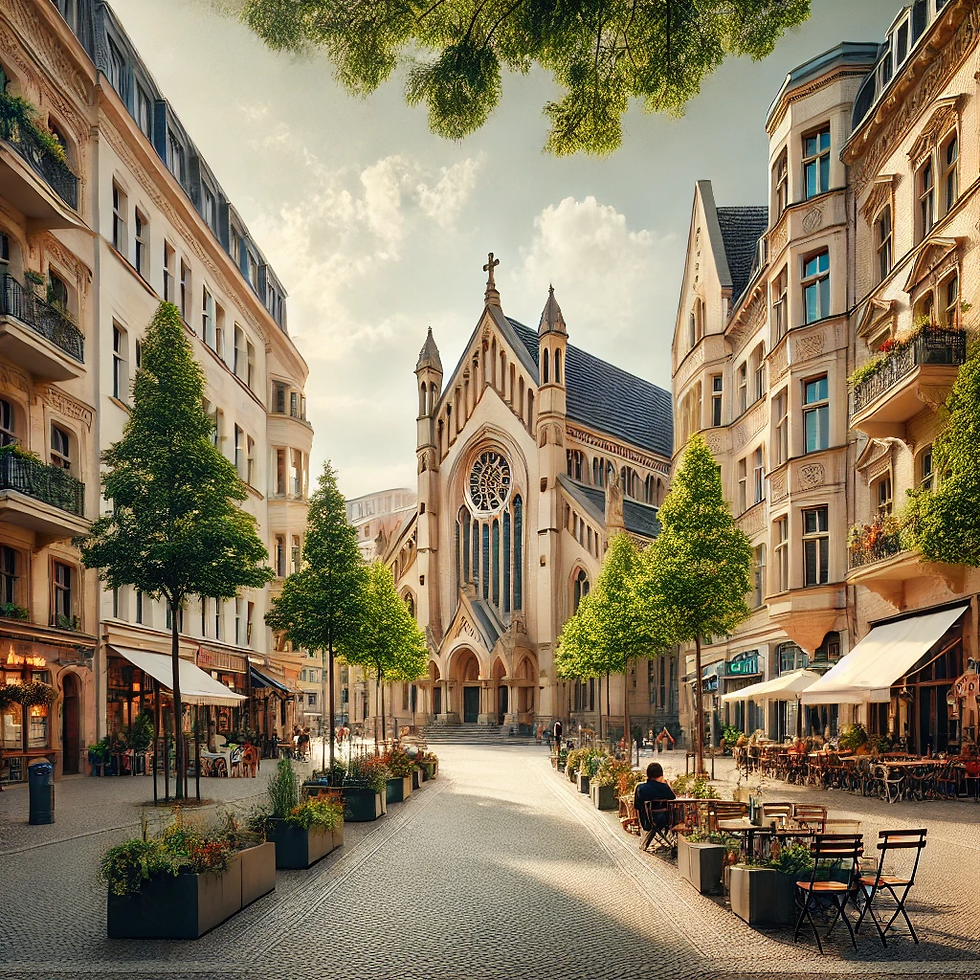
The area around Ludwig-Kirch-Platz is famous for its charming cafés, restaurants, and boutique shops. During the warmer months, the square comes to life as Berliners and visitors sit on café terraces, enjoying the sun and lively conversations. Kids are playing everywhere, their parents are sitting in the best call restaurants and cafes. The streets nearby are lined with beautifully preserved old buildings, a testament to Wilmersdorf’s affluent past. Here, you can feel the blend of calm and sophistication, a contrast to the more fast-paced neighborhoods nearby.
Prager Platz: From Glory to Renewal
Prager Platz, on the other hand, has experienced a more turbulent history. Established at the end of the 19th century, it was once a prestigious area known for its grand residential buildings and urban flair. In the 1920s, the square became a cultural hotspot, famous for its cinemas, cafés, and restaurants. Its architecture and ambiance reflected the cosmopolitan spirit of Berlin’s golden twenties.

However, the Second World War left a significant mark on Prager Platz. Heavily damaged during the war, the square fell into disrepair in the post-war years. During the 1960s and 1970s, Prager Platz symbolized the decline that many parts of Berlin faced during this period. Buildings were abandoned, and the area seemed forgotten amidst the broader reconstruction efforts of the city. It was a time of stagnation and uncertainty for the once-vibrant square.
The revival of Prager Platz didn’t begin until the 1980s. A comprehensive redevelopment plan was put in place, breathing new life into the area. Today, Prager Platz has been transformed into a modern hub with a mix of residential and commercial buildings surrounding a central fountain. The square is now a lively part of Wilmersdorf once again, reflecting Berlin’s resilience and ability to reinvent itself. Prager Platz’s journey from cultural glory, through wartime destruction, and back to a vibrant urban center is emblematic of the broader story of Berlin.
Wilmersdorf: A District of Charm and Change
Berlin-Wilmersdorf showcases many facets of Berlin life: the quiet elegance of Ludwig-Kirch-Platz on one side and the dynamic renewal of Prager Platz on the other. These two squares embody both the history and transformation of the city, and today, they are beloved places that contribute to the unique atmosphere of this part of the capital.
Over the past decades, Wilmersdorf has evolved into a lively yet relaxed district, appreciated for its high quality of life and historical landmarks. Whether you’re enjoying the serene beauty of Ludwig-Kirch-Platz or exploring the modern resurgence of Prager Platz, these locations offer a snapshot of Berlin’s ongoing story of change and renewal.


Comments